7.1 Definition of AI Agents and Agentic AI Systems
Agentic AI systems are a paradigm shift in how we design and interact with artificial intelligence. Unlike traditional software that executes predefined instructions, agentic AI systems are designed to operate autonomously. At their core, these systems are empowered to perceive their environment, reason about their observations, make decisions, and take actions to achieve specific goals.
There are many definitions of AI Agents out there, some advocating for a continuous spectrum describing the level of agency of a system in place of a binary classification to determine whether a system is agentic or not agentic. However, for the purposes of this standard, we will reference Anthropic’s definition of an agent and treat it synonymously as our definition for agentic systems.
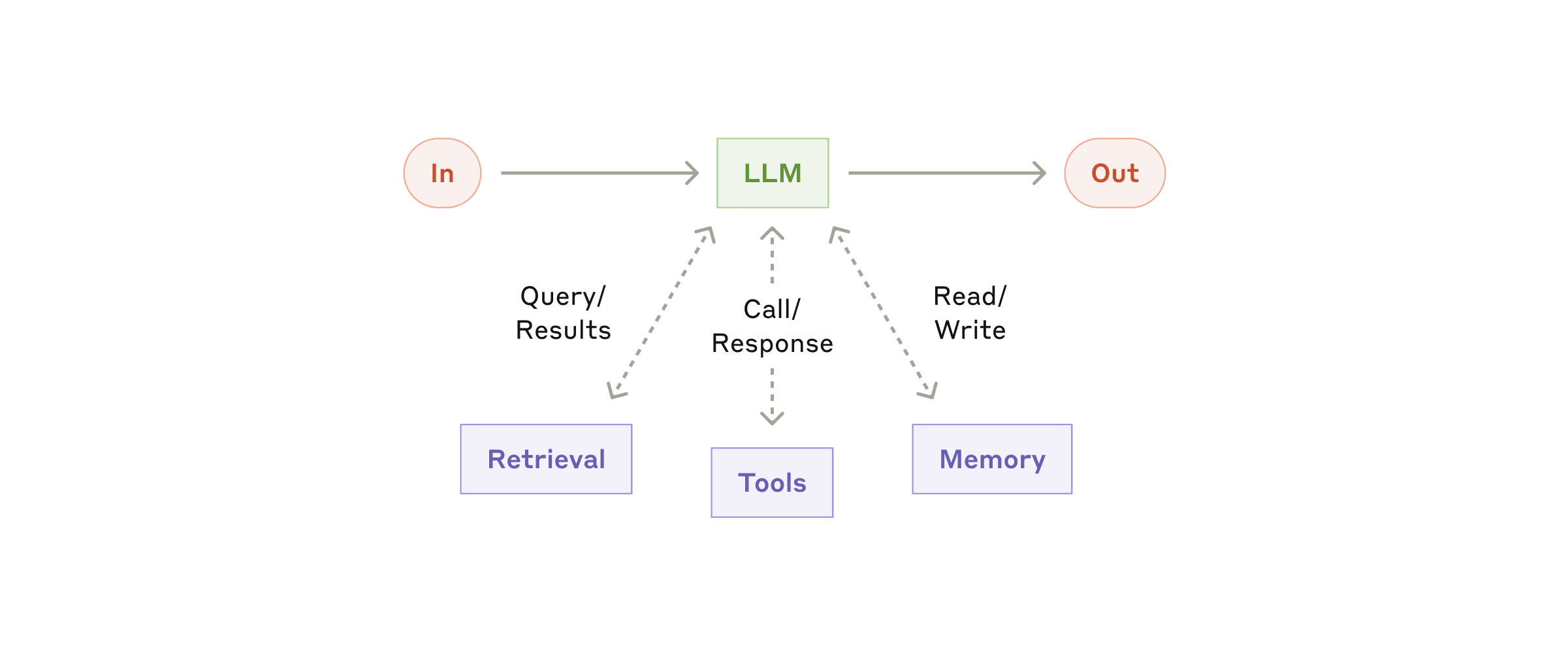
To provide this definition, we start by describing our foundational building block – the augmented LLM, which is an LLM enhanced with augmentations such as retrieval, tools, and memory.
Augmented LLM
Source: https://www.anthropic.com/engineering/building-effective-agents
It is important to note that a LLM by itself does not and cannot perform the interactions with the Tools or Memory - it can determine that the next step is to “read from Memory” but is not able to do the actual reading. That is where an orchestrator (or “tool router”) comes in; a piece of code that detect the calls in the LLM response and acts on them.
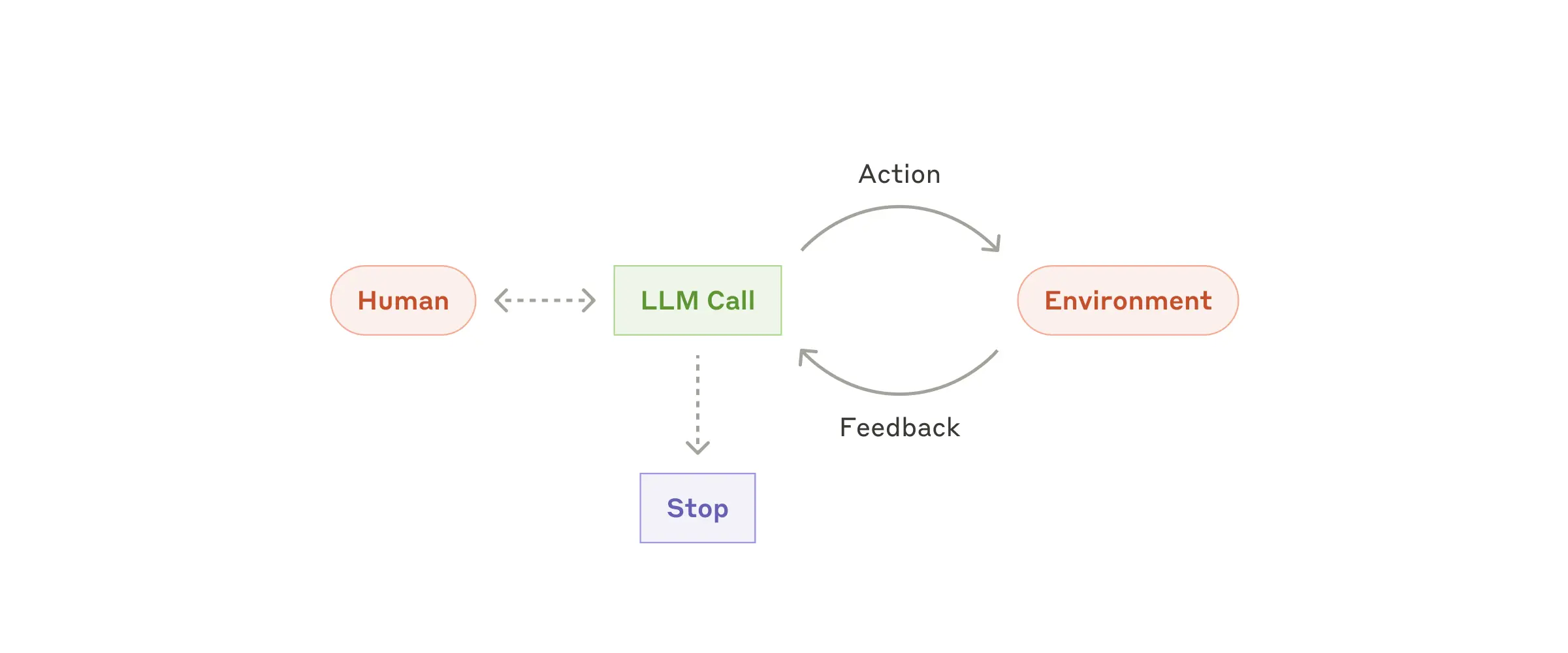
An agent builds on this concept of an augmented LLM by including one or more orchestration loops that takes action based on the LLM’s response, interacts with the environment, and provides the environmental feedback to the LLM as one of the input for it to decide on the next step.
Example of an agent, showing an agentic loop
Source: https://www.anthropic.com/engineering/building-effective-agents
For avoidance of doubt, an agent can exist without access to tools or external data – such as self-correcting LLMs.
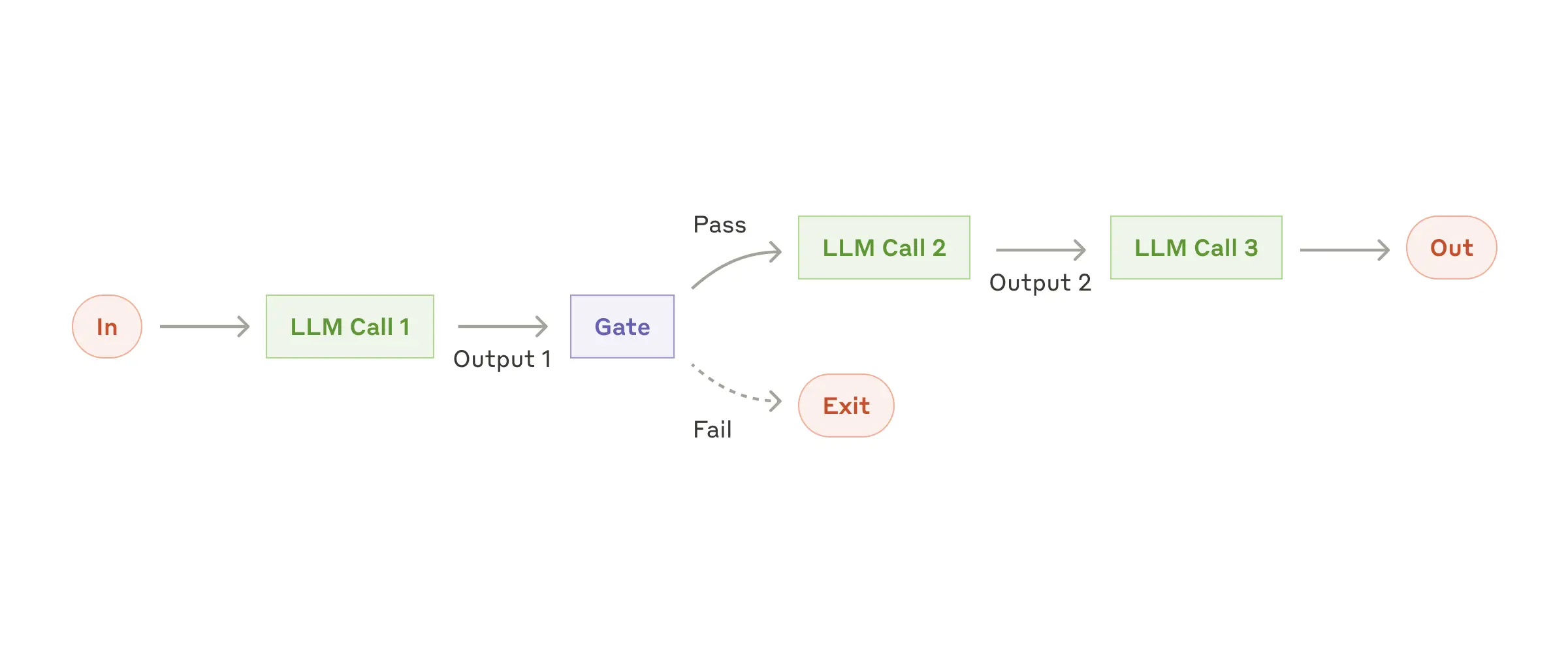
Note that our definition of agent excludes workflows, which are systems where LLMs and tools are orchestrated through predefined code paths. An example of a workflow would be prompt chaining, which decomposes a task into a sequence of steps with each LLM call processing the output of the previous one.
Prompt chaining, which is an example of a workflow rather than an agent
Source: https://www.anthropic.com/engineering/building-effective-agents
By contrast, an agent is used for open-ended problems where it is difficult or impossible to predict the required number of steps, and where a fixed path cannot be hardcoded. The scope of this Standard shall apply only to agents. Throughout this document, the term “agentic system” is used interchangeably with “agent”1.
7.1.1 Exclusions
Software Development / Scalability
This standard, while centered on Agentic AI, is not mutually exclusive with the standard best practices for software development. This is because Agentic AI systems are fundamentally software systems. Therefore, this document does not cover all aspects of software development or infrastructure considerations like scalability and reliability.
Model Performance
This standard deliberately refrains from evaluating the intrinsic performance metrics of the underlying LLMs or agents, such as recall or precision. Instead, its primary focus lies on the broader systemic implications and practical applications of these agentic AI systems within the Whole-of-Government (WOG) context. This distinction is crucial because while individual LLM performance is important for specific tasks, this standard aims to address the challenges and opportunities presented by the integration and deployment of AI agents. The intent is to provide a comprehensive guide for the responsible and effective adoption of agentic AI beyond technical benchmarks.
Most importantly, this standard acknowledges but does not cover potential issues arising from intentional or accidental misuse of prompt outputs - e.g. from allowing the agent to execute malicious generated code, and improper data management. Please refer to the Agentic Risk and Capability Framework for more information.
Search & Retrieval, Storage
This standard will not delve into the intricacies of common underlying technologies that support AI systems. These include, but are not limited to, vector databases and various forms of search engines (e.g. Elasticsearch). The rationale for this exclusion is that these technologies already possess well-established and widely accepted best practices, particularly regarding robust data management, security protocols, and operational efficiency. Therefore, this standard assumes a foundational understanding and adherence to these existing standards when integrating agentic AI capabilities.
-
Anthropic distinguishes workflows and agents, but categorises all these variations as agentic systems. This Standard does not follow this definition of agentic systems. ↩