Reference architecture
The reference architecture separates telemetry production, collection and protection, storage, and use. A product may implement these layers with one platform or several tools; the logical responsibilities remain.
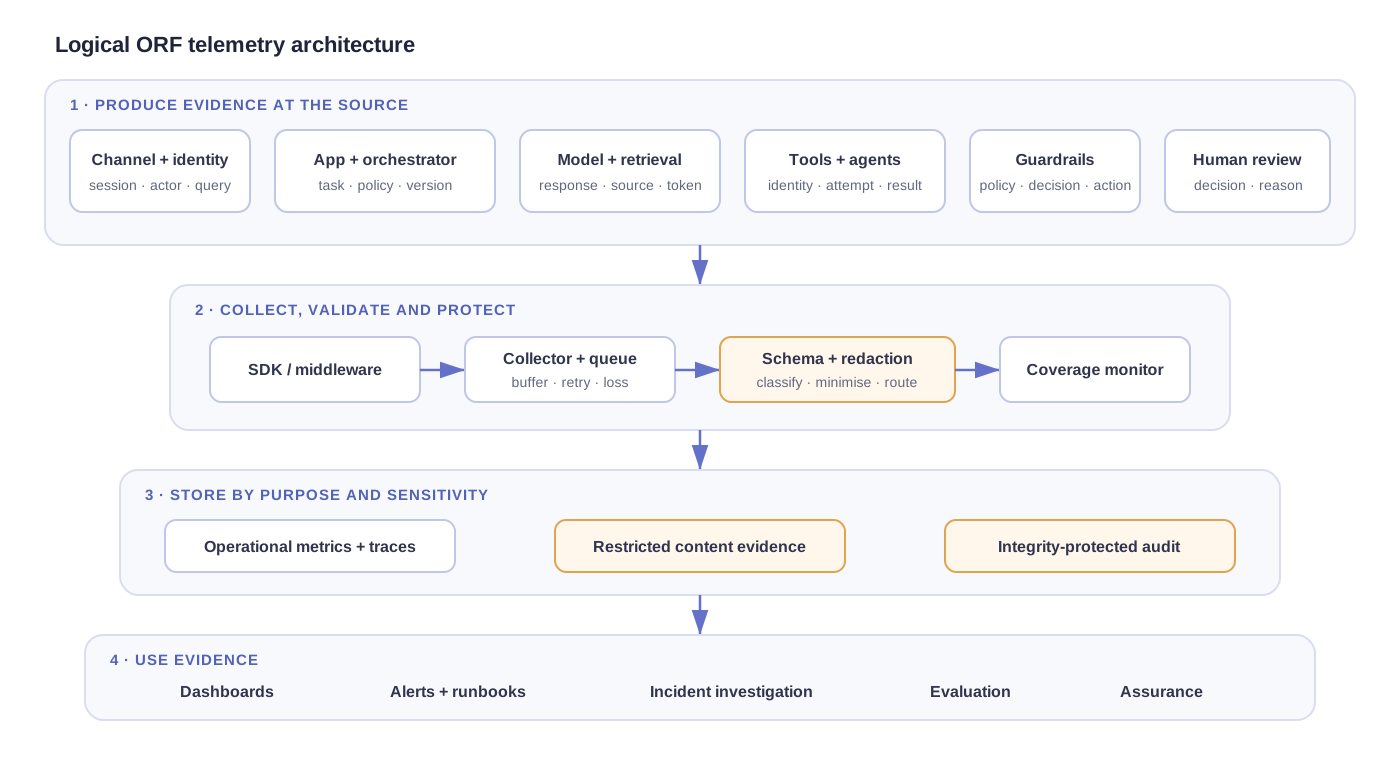
Logical architecture
┌──────────────────── AI service and dependencies ────────────────────┐
│ Channel → App → Orchestrator → Model → Retrieval → Tools / Agents  │
│                ↘ Guardrails ↔ Human review ↗                       │
└─────────────────────────────┬───────────────────────────────────────┘
                              │ logs, spans, metrics, events
                              ▼
┌──────────────── collection and protection ─────────────────────────┐
│ SDK / middleware → collector / queue → schema validation           │
│                     → redaction / routing → loss monitoring         │
└───────────────┬───────────────────┬───────────────────┬─────────────┘
                ▼                   ▼                   ▼
        Operational store    Restricted content   Audit evidence
        metrics / traces     approved raw data    integrity-protected
                └───────────────────┬───────────────────┘
                                    ▼
┌──────────────────────────── uses ───────────────────────────────────┐
│ dashboards │ alerts │ incident search │ evaluation │ assurance     │
└────────────────────────────────────────────────────────────────────┘
Instrumentation points
| Point | Capture |
|---|---|
| Service entry | session/query/request IDs, channel, actor reference, intent classification, timestamp |
| Orchestrator/agent | task and subtask structure, agent version, step count, decisions, outcome |
| Model call | model ID, operation, parameters, token usage, latency, approved content/reference |
| Retrieval/memory | query reference, index/version, document IDs, classifications, scores, writes |
| Guardrail/policy | policy/version, category, decision, confidence where meaningful, action taken |
| Tool/API | tool and operation, safe parameters, identity/scope, attempt, outcome, side-effect reference |
| Human review | request, reviewer role, decision, reason, timestamp, resulting action |
| Service exit | final outcome, response/action reference, duration, safe/unsafe failure classification |
Correlation pattern
Create trace context at the earliest trusted entry point. Propagate it across HTTP/RPC headers, queues, jobs, callbacks, and agent delegation. For asynchronous operations, retain a link to the initiating span even when a direct parent-child relationship is not valid.
Do not expose internal trace or event IDs as sequential user-facing identifiers. If users need a support reference, generate a separate non-sensitive reference that authorised staff can resolve to the trace.
Separate content from operational metadata
A useful default is two linked stores:
- Operational telemetry contains low-sensitivity metadata, durations, outcomes, versions, identifiers, and aggregates used by engineers and operators.
- Restricted evidence contains approved raw or redacted content required for investigation or evaluation and is accessible only for defined purposes.
Link the stores with a random evidence reference. This reduces the number of people and systems that can access prompt, response, retrieval, and tool content.
Integrity pattern for incident evidence
For flagged safety or security events:
- copy the approved evidence set into an append-only or integrity-protected location;
- record the source event IDs, capture time, case ID, classification, and evidence hash;
- audit every access and export;
- preserve the original event order and time source; and
- apply incident retention and legal-hold rules where relevant.
Integrity protection does not justify collecting unnecessary content.
Failure behaviour
Decide how the service behaves if telemetry is unavailable:
| Situation | Possible policy |
|---|---|
| Non-consequential low-risk request | continue with local buffering and raise platform alert |
| High-impact external action | fail closed or require human approval if mandatory audit evidence cannot be written |
| Collector backpressure | bounded queue, safe sampling policy, no unbounded application memory growth |
| Redaction failure | quarantine or drop sensitive payload; emit metadata-only failure event |
| Evidence store unavailable | prevent privileged action or retain encrypted local evidence for bounded retry |
The product and risk owners should approve these choices; they are business-control decisions, not only platform settings.
Multi-tenant platforms
Include service_id, tenant_id where allowed, environment, owner, and data classification on every event. Enforce tenant separation at ingestion and query time. A shared collector must not become a path for one product team to access another product's restricted content.
Done when: the architecture shows every producer, trust boundary, redaction point, store, consumer, access path, loss signal, and deletion path.